T-Trex: A Smart Walker
Group project for Informal Robotics (Instructor: Chuck Hoberman)
Team: Hayley Bloch, AnhPhu Nguyen, Ellen Pan
Context
This project was developed as a group assignment for Informal Robotics, a studio-based class taught by Chuck Hoberman. The goal of the course was to explore nontraditional robotic systems that prioritize motion, physical expression, and interaction with space over task efficiency or industrial optimization.
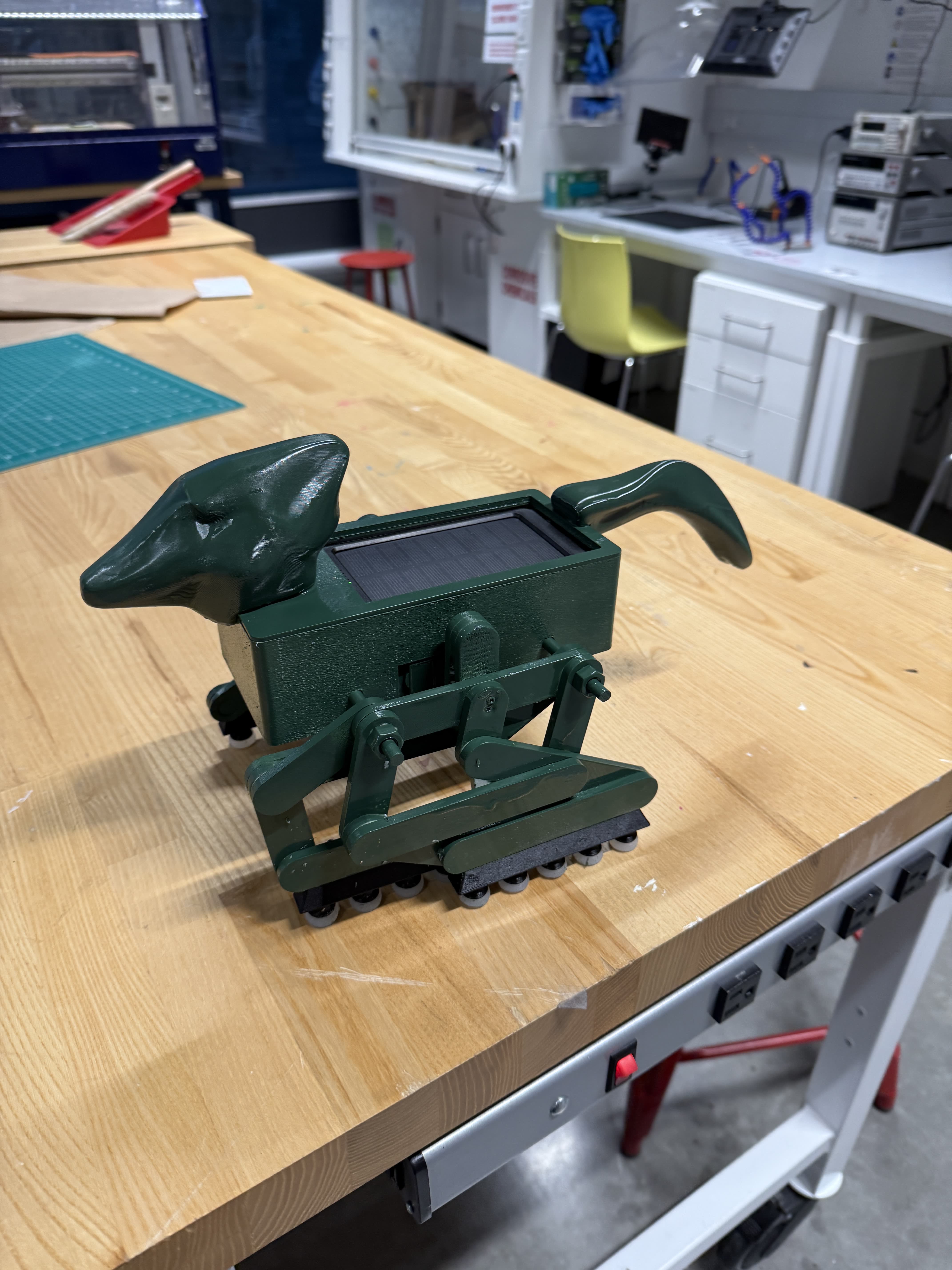
Our team designed and built T-Trex, a Jansen-inspired bipedal walking robot that treats locomotion itself as a form of engagement. The robot draws inspiration from the Tyrannosaurus rex, reinterpreted as a speculative, modern fossil that roams, observes, and inhabits space autonomously.
Project Overview
T-Trex is a walking robot built around a mechanically driven leg system rather than conventional wheeled motion. The system emphasizes organic gait, balance, and physical presence.
Key system features
- Jansen-style multi-linkage leg mechanisms designed to produce a smooth walking cycle
- Independently driven legs enabling forward, backward, and rotational movement
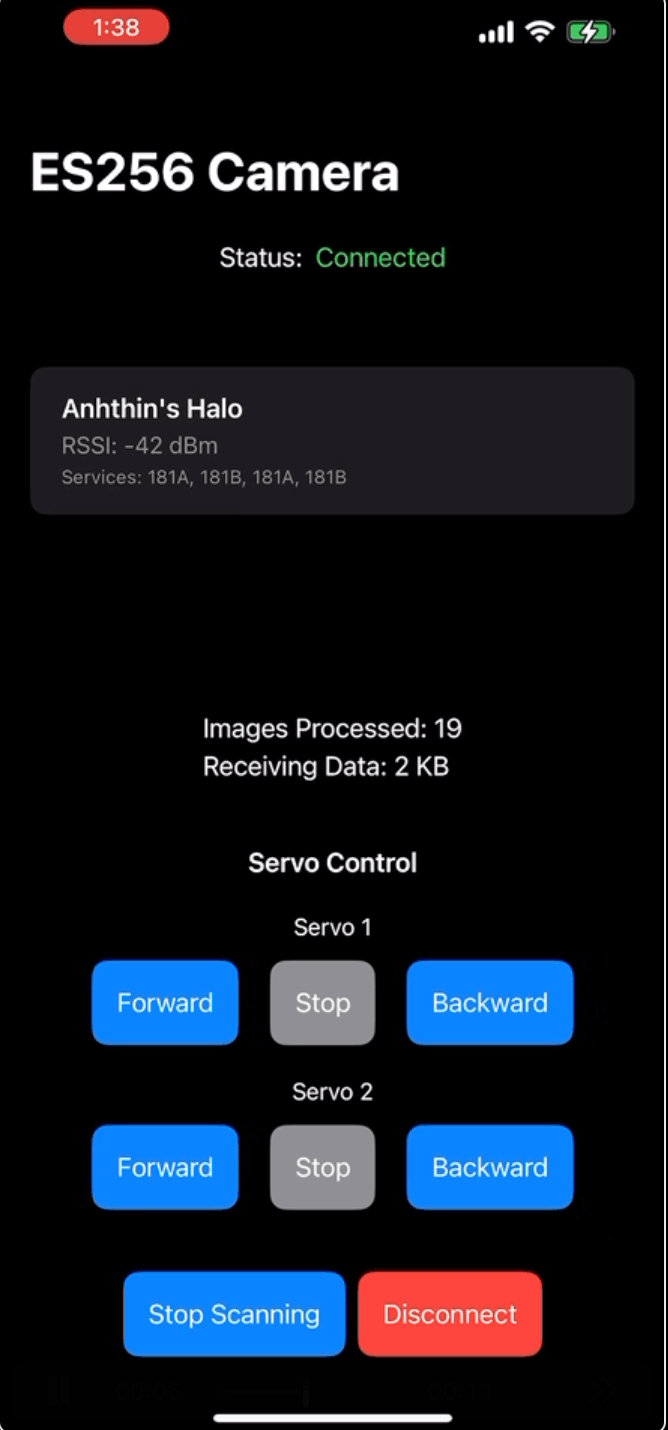
- Remote control via a custom iOS interface
- Streaming camera with face recognition and autonomous wandering behavior
- Solar-powered battery system for daylight self-sufficiency
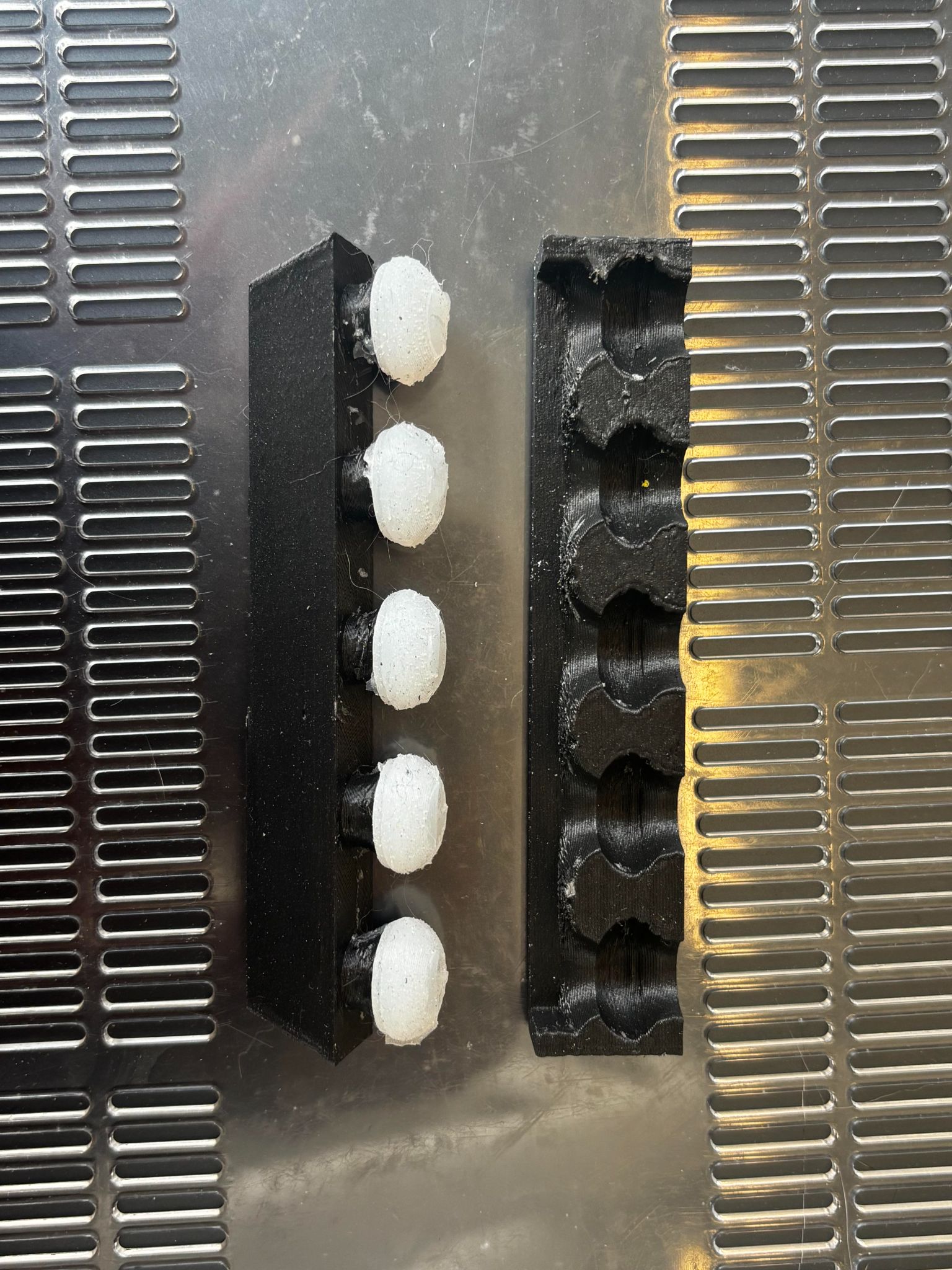
- Silicone-molded feet to improve grip on smooth surfaces
My Role
This was a collaborative project with clearly divided responsibilities.
My primary contributions included
- Full leg mechanism design and kinematic planning
- Body and structural design
- All mechanical 3D CAD modeling
- 3D printing, iteration, and physical fabrication
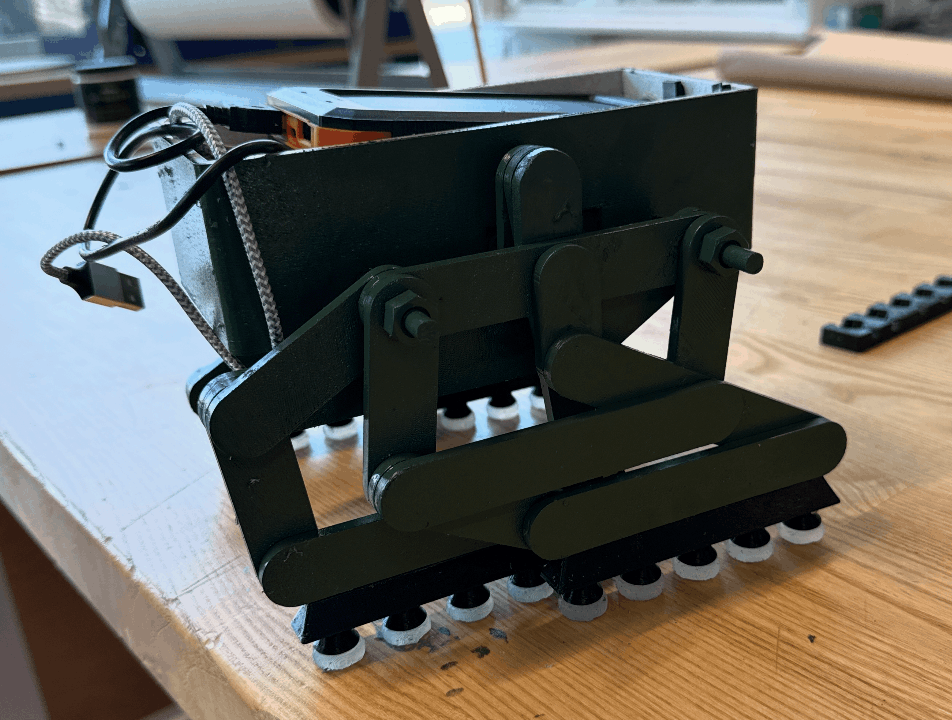
- Mechanical assembly and integration
My teammates focused on the robot's visual styling, documentation, and software development, including the mobile control interface, firmware, and computer vision features.

What I Did
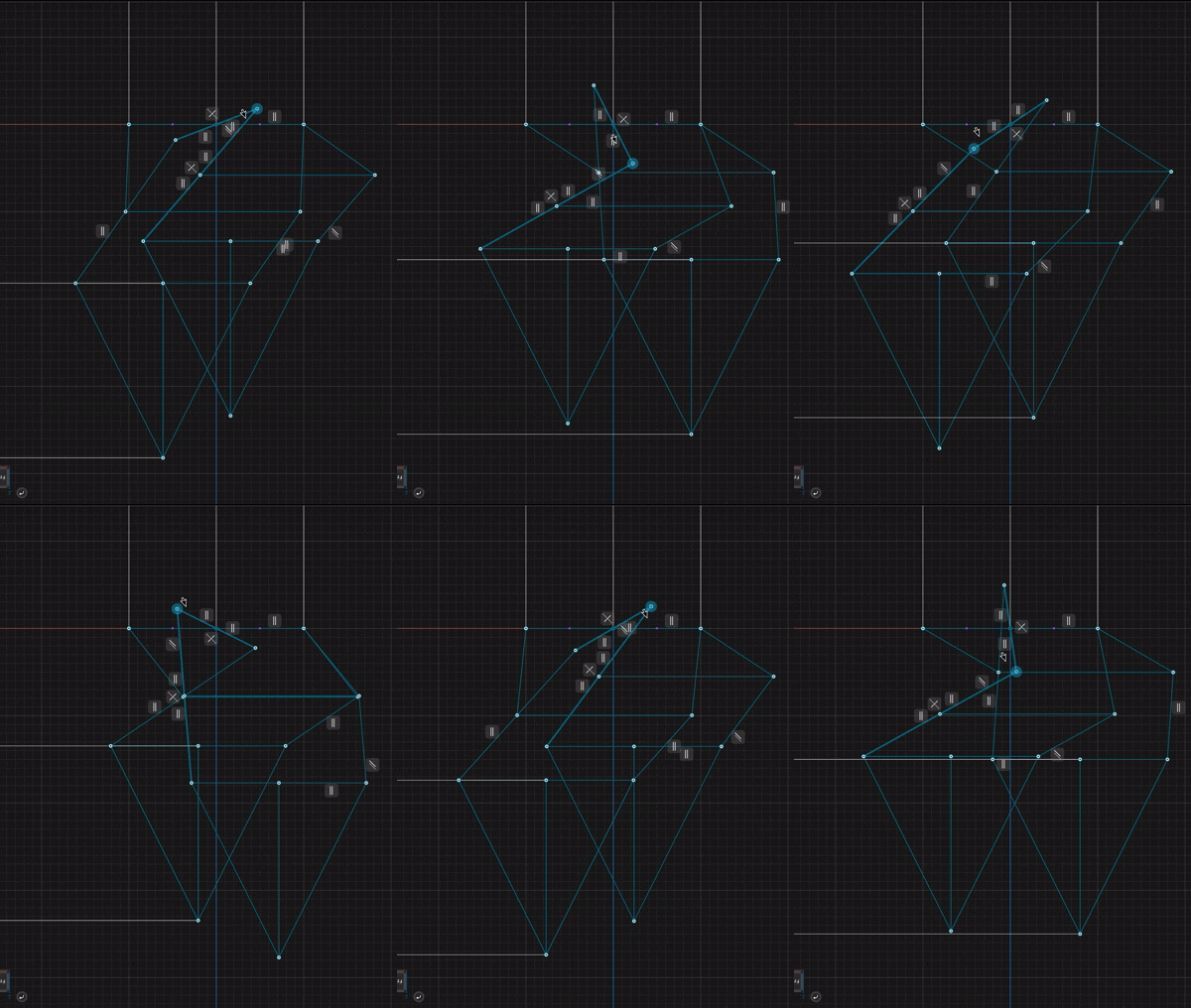
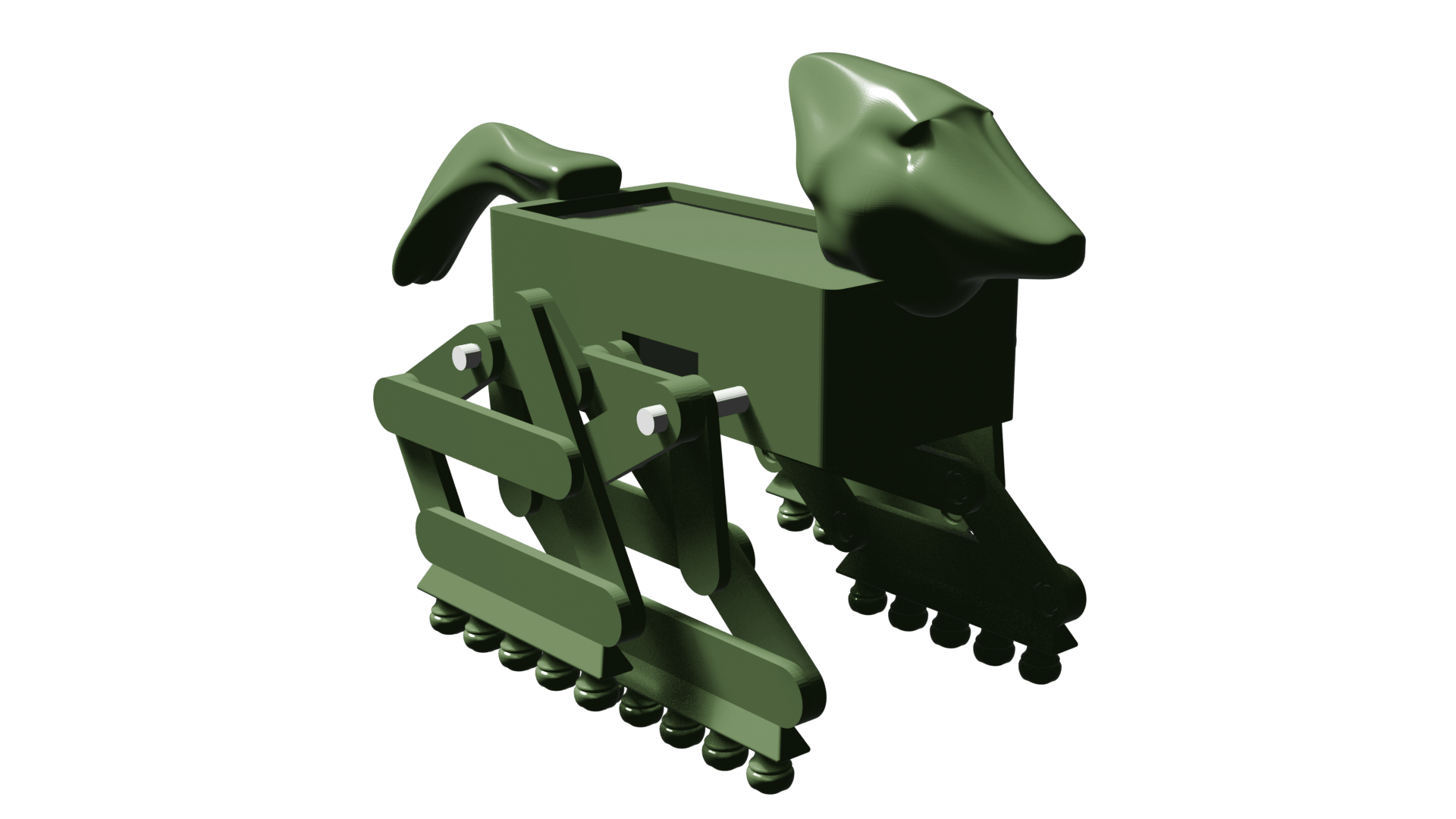
I designed the complete mechanical walking system, starting from a custom leg architecture built from two four-bar linkages and one three-bar mechanism per leg. The goal was to allow a single actuation point to drive an entire leg pair while maintaining balance and a natural gait.
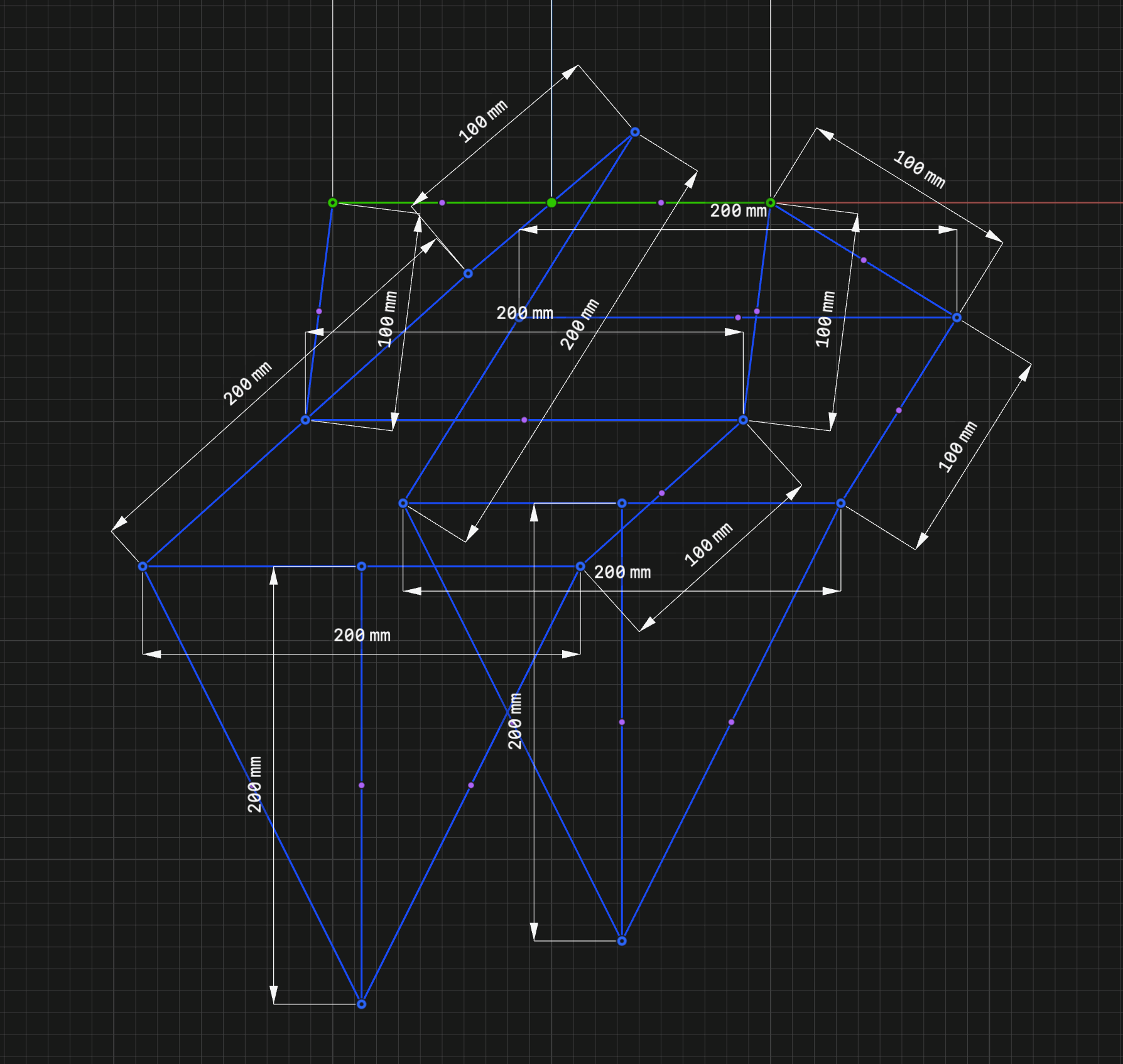
I modeled, printed, tested, and iterated multiple versions of the leg system, beginning with paper and wood mockups to validate folding behavior beyond simulation. Early prototypes revealed balance issues and ground contact inefficiencies, which informed later revisions such as removing the bottom triangular linkage to improve stability.
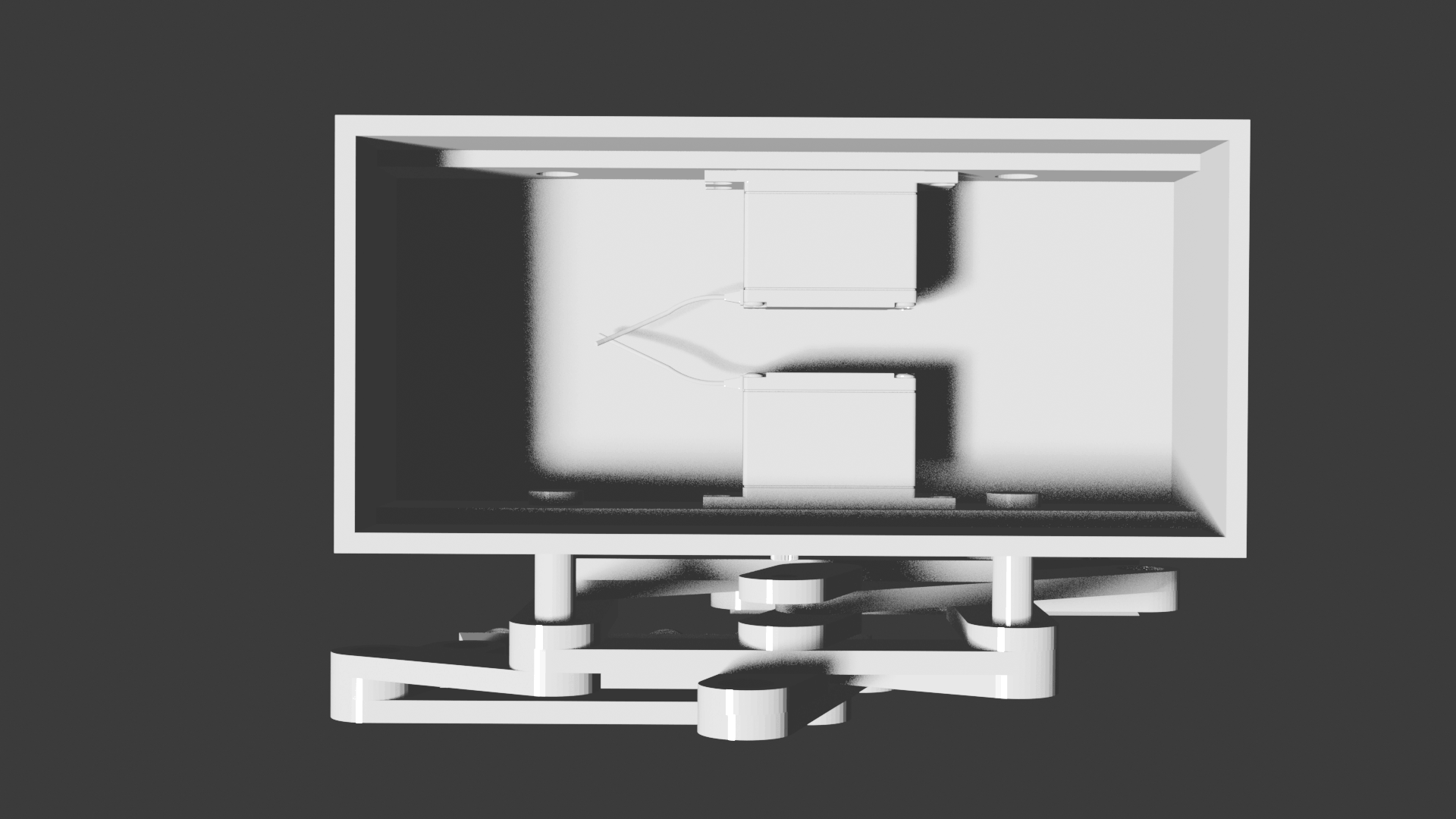
I also designed the robot's body structure to house motors, batteries, and electronics while maintaining a balanced center of mass. Final assemblies integrated silicone-molded feet to improve traction and reduce slipping during walking.
How I Did It
The process moved through several phases:
- Initial kinematic sketches and linkage simulations
- Dimensional tuning through trial and error to achieve a stable gait
- Physical prototyping using paper, wood, and early 3D prints
- Iterative CAD refinement to address balance, friction, and breakage
- Full mechanical assembly with motors, power systems, and electronics
Throughout the process, I prioritized designing mechanisms that could tolerate fabrication imperfections and real-world forces, rather than relying on idealized simulations alone.
Why These Design Decisions
Rather than using wheels or off-the-shelf walking kits, we chose a Jansen-inspired linkage system to foreground motion as an expressive element. The mechanical complexity is intentional—it makes the robot's movement legible, slightly awkward, and alive.
Designing the legs around a single actuation point reduced control complexity while amplifying the importance of mechanical tuning. The body design and tail were shaped not only for aesthetics, but also to manage balance and weight distribution, which became one of the central engineering challenges of the project.
This approach reflects my interest in robotics as a physical, mechanical medium, where behavior emerges from structure as much as from software.
Challenges and Lessons Learned
Key challenges included
- Maintaining balance due to inline leg placement
- Managing weight distribution from the battery and power system
- Friction and layer weakness in 3D printed parts
- Breaking points introduced by print orientation and supports
These constraints reinforced the importance of designing mechanisms that are forgiving, repairable, and responsive to real material behavior.
Outcome
The final robot successfully demonstrated controlled walking, rotation, and remote operation, along with autonomous behaviors driven by face recognition. More importantly, it served as a proof of concept for treating robotic locomotion as an expressive system rather than a purely functional one.
Questions?
If you have any questions or comments, feel free to reach out via hayleybloch@college.harvard.edu